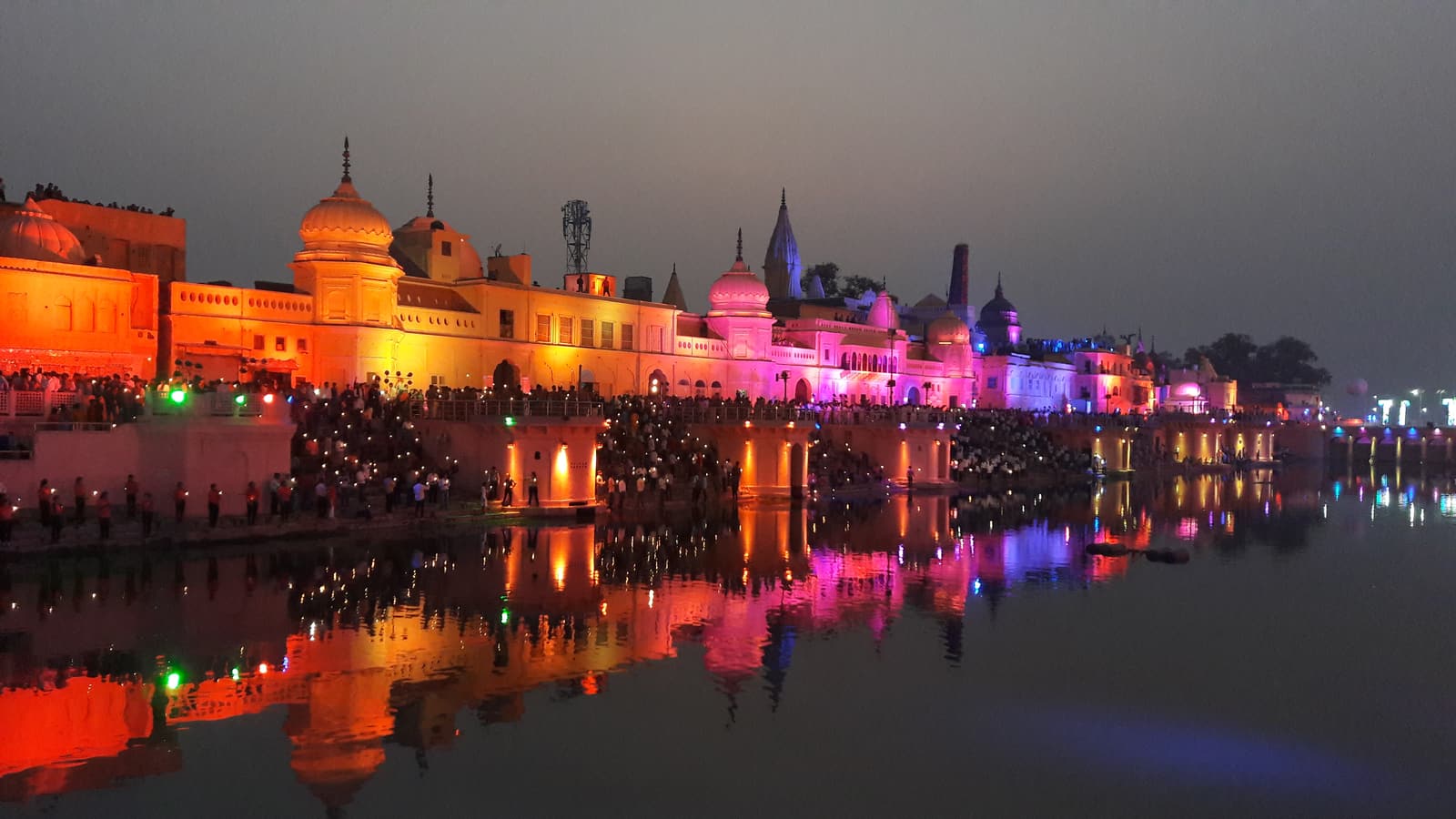
Ayodhya is in eastern Uttar Pradesh, on the south bank of the Saryu. Since the temple opened it has gained a new airport and a rebuilt railway station, and it sits on the busy Lucknow–Gorakhpur highway, so it is far easier to reach than it used to be.
Distances and times below are approximate and assume normal traffic. Allow more in winter fog, in the monsoon and around festivals.
By road: distances at a glance
| From | Distance | Typical drive | Notes |
|---|---|---|---|
| Lucknow | About 135 km | 2.5–3 hours | Four-lane highway (NH27); the main gateway city |
| Gorakhpur | About 135 km | 2.5–3 hours | Same highway, from the east |
| Prayagraj | About 165 km | 3.5–4 hours | Via Sultanpur or Pratapgarh |
| Varanasi | About 200–220 km | 4–5 hours | Via Jaunpur and Sultanpur |
| Delhi | About 650–700 km | 10–12 hours | By expressway via Lucknow; train or flight is easier |
By air
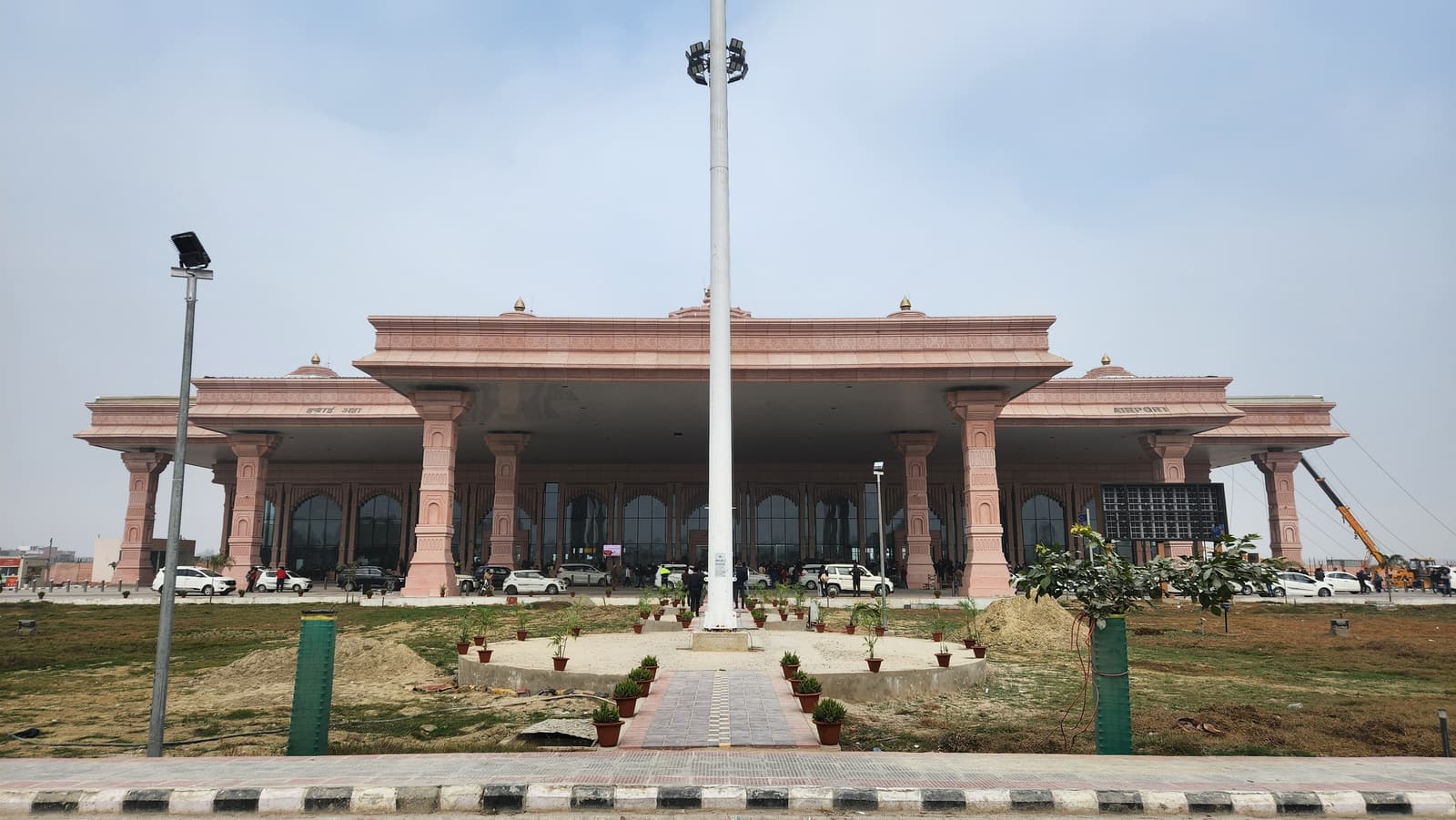
Maharishi Valmiki International Airport, Ayodhya Dham (IATA: AYJ) opened at the end of 2023 and lies roughly 10 km from the temple area. Airlines have operated direct flights from cities such as Delhi, Mumbai, Ahmedabad, Bengaluru and Hyderabad, but routes and frequencies change often — check with the airlines. Taxis and app cabs meet flights; electric buses have also linked the airport with the city.
If you cannot find a convenient flight, Lucknow’s Chaudhary Charan Singh International Airport (LKO) has far more connections and is about three hours away by road. Gorakhpur, Varanasi and Prayagraj airports are alternatives.
By train
Ayodhya has two main stations:
- Ayodhya Dham Junction (station code AY) — the rebuilt station in the temple town, about 1–1.5 km from the Ram Mandir entrance. This is the one to choose if your train stops there.
- Ayodhya Cantt (AYC) — the former Faizabad Junction, about 8–10 km from the temple, served by many long-distance trains.
Vande Bharat Express services have connected Ayodhya with Delhi (Anand Vihar Terminal) via Kanpur and Lucknow, and with Gorakhpur and Lucknow. Amrit Bharat Express trains — non-air-conditioned long-distance services — also call here, the first of them having been flagged off from Ayodhya. Many other express trains link Ayodhya with Delhi, Mumbai, Kolkata, Varanasi and Prayagraj. Train numbers, stops and timings change, so check IRCTC or the National Train Enquiry System, and book early for festival dates.
By bus
Uttar Pradesh State Road Transport Corporation (UPSRTC) buses run frequently from Lucknow, Gorakhpur, Prayagraj and Varanasi, in ordinary and air-conditioned classes. Private coaches run overnight from Delhi. Buses arrive at the Ayodhya bus station on the highway; from there take an e-rickshaw into the old town.
By car or taxi
From Lucknow, the NH27 is a straightforward four-lane drive. A private taxi for the day is the most comfortable way to visit as a day trip, and it is exactly what the guided day tours from Lucknow and Varanasi provide. Private vehicles cannot drive up to the temple: you will be directed to a parking area and continue on foot or by e-rickshaw.
Getting around Ayodhya
- On foot. The Ram Mandir, Hanuman Garhi, Kanak Bhawan and Dashrath Mahal are within about a kilometre of each other. The widened Ram Path, Bhakti Path and Janmabhoomi Path have broad pavements.
- E-rickshaws. The standard way to cover short distances — from the station to Ram Path, or from the temples to the ghats. They run shared or reserved; agree the fare before you get in.
- Electric buses. City e-buses have run on the main corridors, including to the airport and Ayodhya Cantt. Routes and frequency vary.
- Taxis and app cabs are best for Guptar Ghat, the airport and Ayodhya Cantt station.
On festival days and whenever crowds are very large, the police close the central roads to all vehicles and may set up one-way walking routes. Follow the signs and announcements, and expect to walk further than usual.