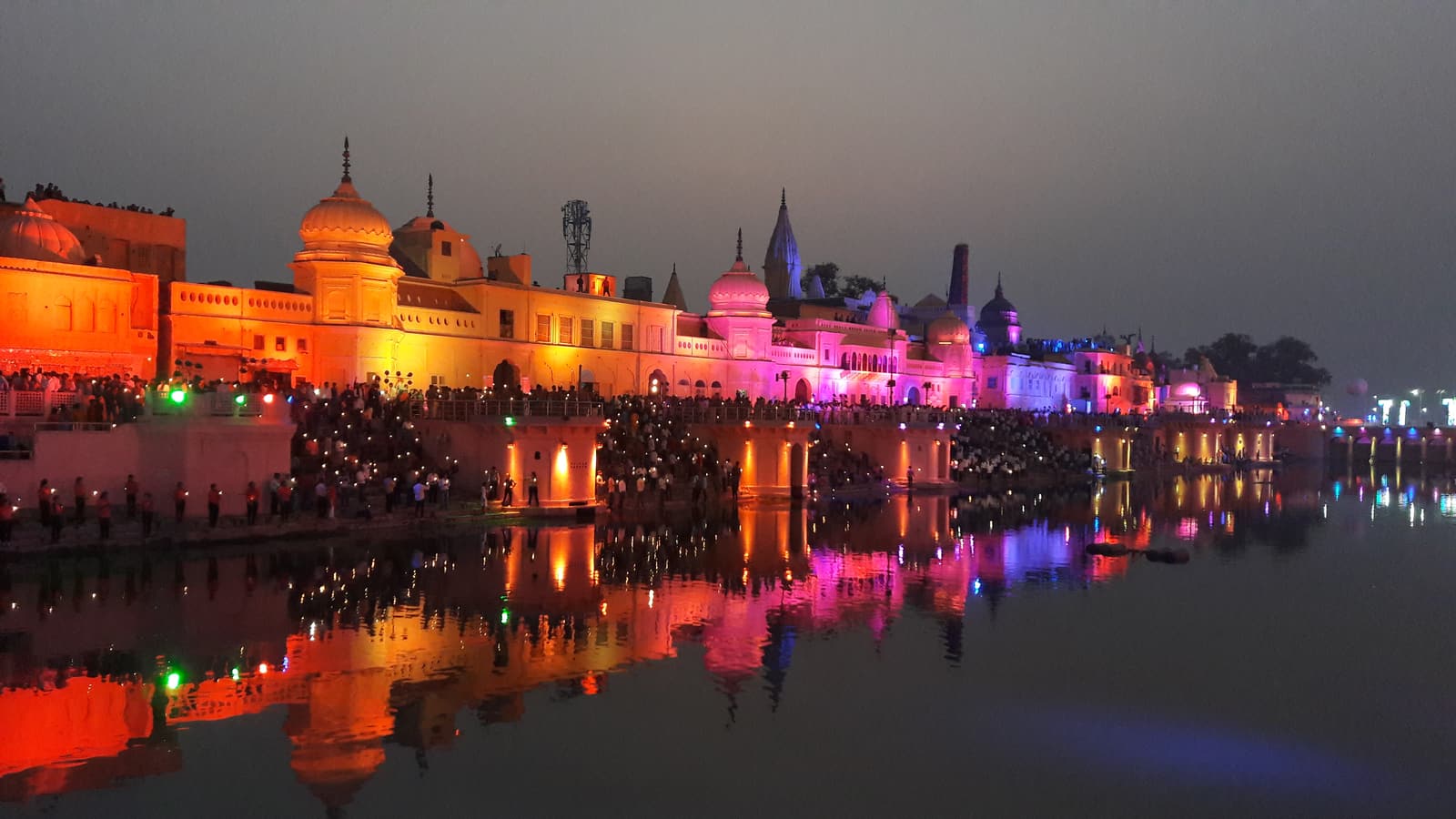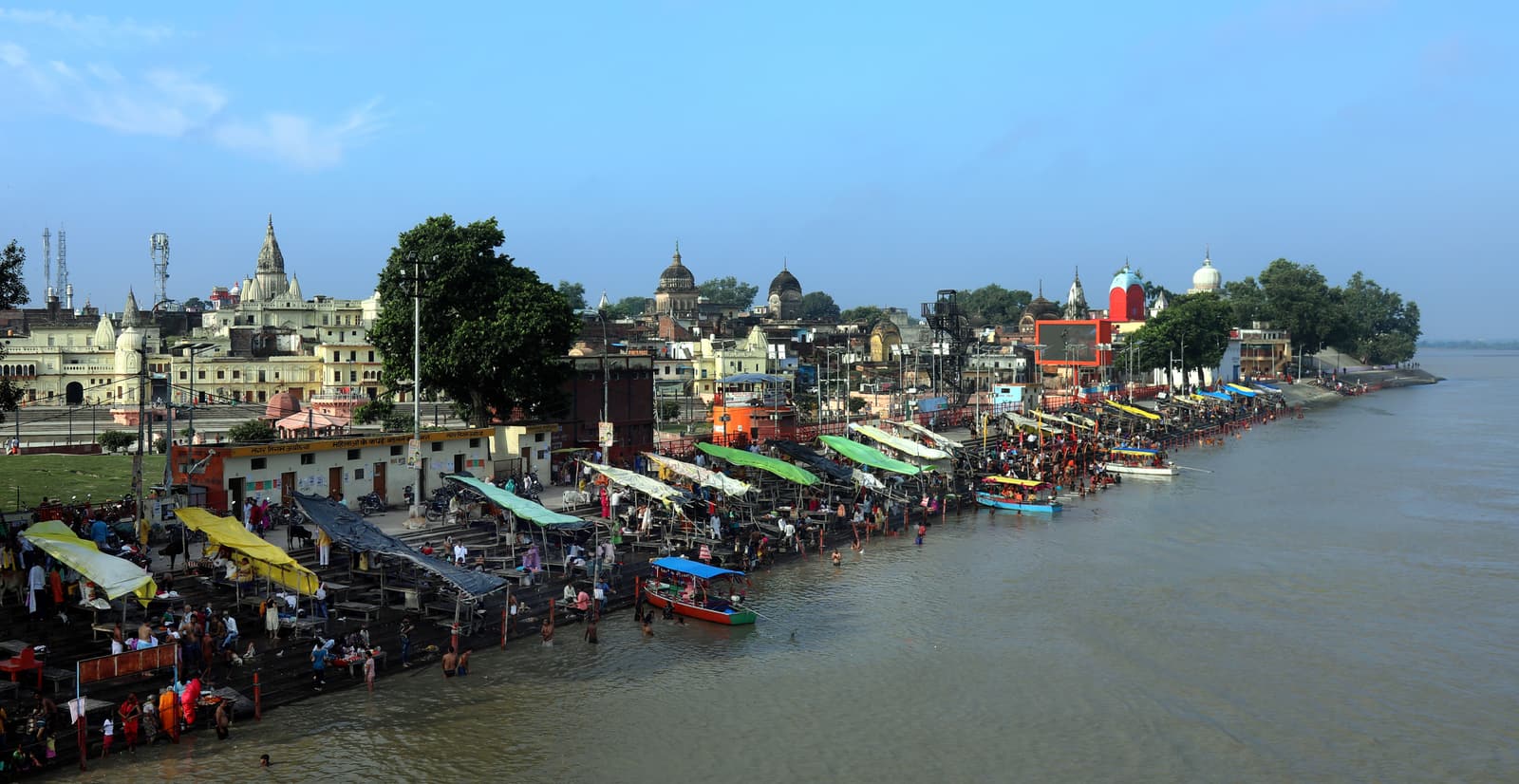
Ayodhya is one of the oldest sacred places in India. In the Ramayana it is the capital of the kingdom of Kosala and the birthplace of Lord Ram; for Hindus it is one of the seven holy cities whose pilgrimage is believed to lead towards liberation. Jain tradition honours it as the birthplace of several Tirthankaras, and it has Buddhist and Sikh associations too.
For most visitors today the purpose is darshan at the Ram Mandir, but the town rewards a little more time: fortress-like Hanuman Garhi, the painted halls of Kanak Bhawan, and evenings on the Saryu when the lamps are lit.
A short history of the Ram Mandir
The temple stands at the place that Hindu tradition reveres as Ram Janmabhoomi, the birthplace of Lord Ram. Following the Supreme Court of India’s judgment of November 2019, the Government of India set up the Shri Ram Janmbhoomi Teerth Kshetra trust to build and manage it. The ground-breaking ceremony was held on 5 August 2020, and the idol of Ram Lalla was consecrated in the sanctum on 22 January 2024. Building work on the rest of the complex carried on in phases afterwards.
The places not to miss
 Ram Mandir & Ramkot
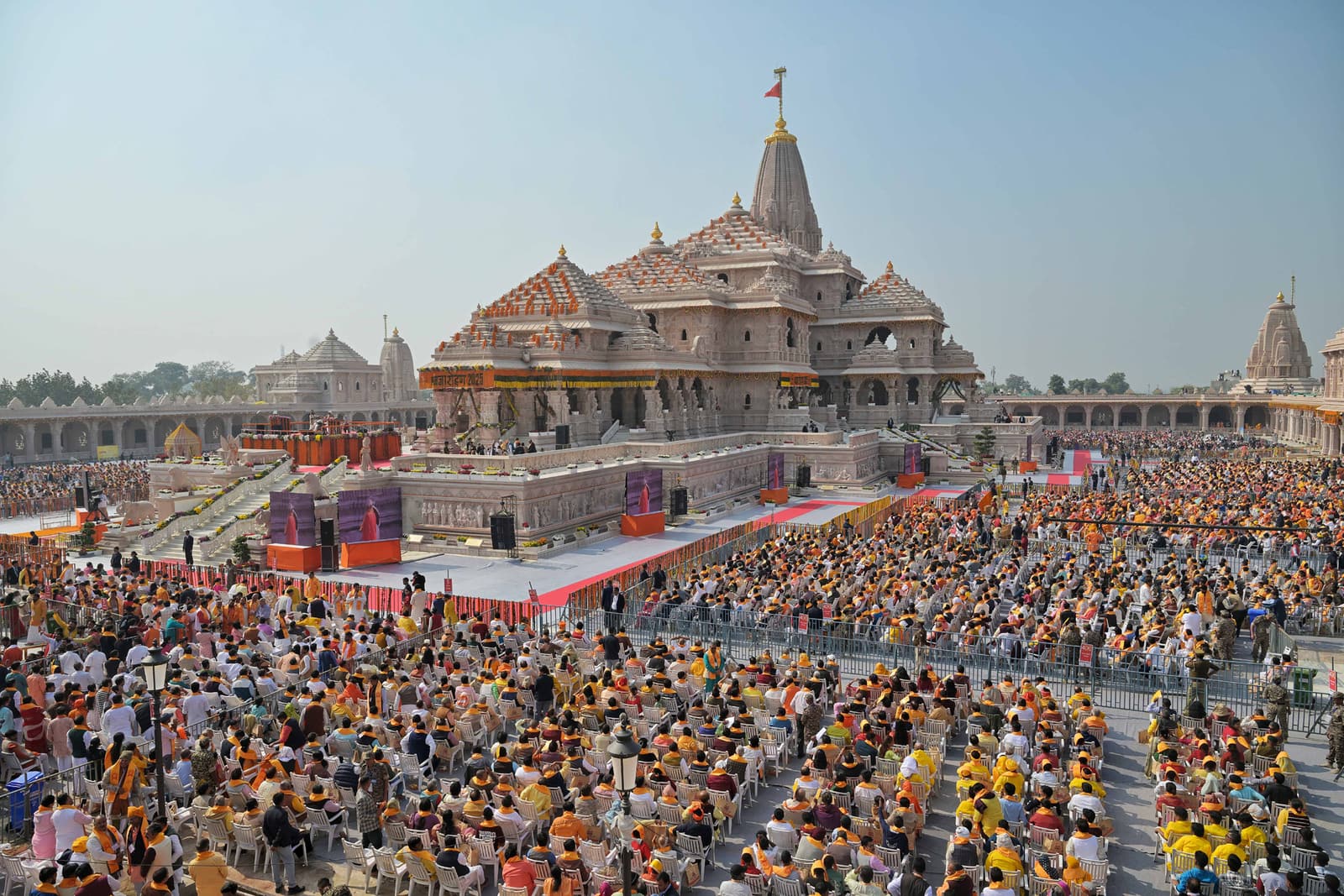
 Ram Mandir
The Shri Ram Janmabhoomi Temple
The great sandstone temple at the place revered as the birthplace of Lord Ram. Built in the Nagara style and consecrated on 22 January 2024, it houses the idol of Ram Lalla and is the reason most visitors come to Ayodhya.
 Ram Mandir & Ramkot
 Hanuman Garhi
The hilltop fortress of Hanuman
A fort-like temple on a mound in the middle of town, reached by a flight of 76 steps. Pilgrims traditionally come here first to ask Hanuman, guardian of Ayodhya, for permission to visit Lord Ram.
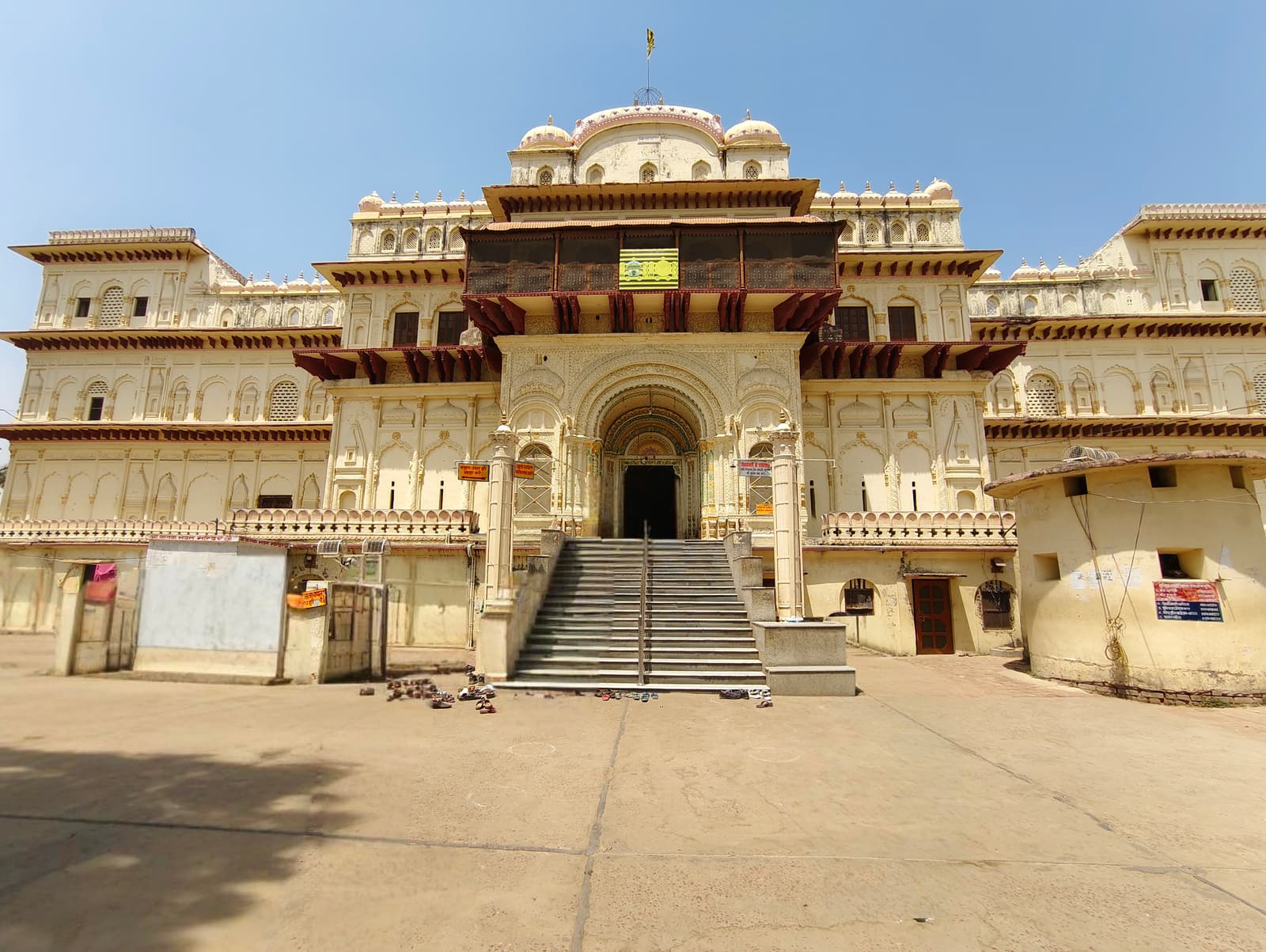 Ram Mandir & Ramkot
 Kanak Bhawan
The golden palace of Sita and Ram
An elegant palace-temple a short walk from the Ram Mandir, dedicated to Ram and Sita. Tradition says Queen Kaikeyi gave it to Sita after her wedding; the present building dates from 1891.
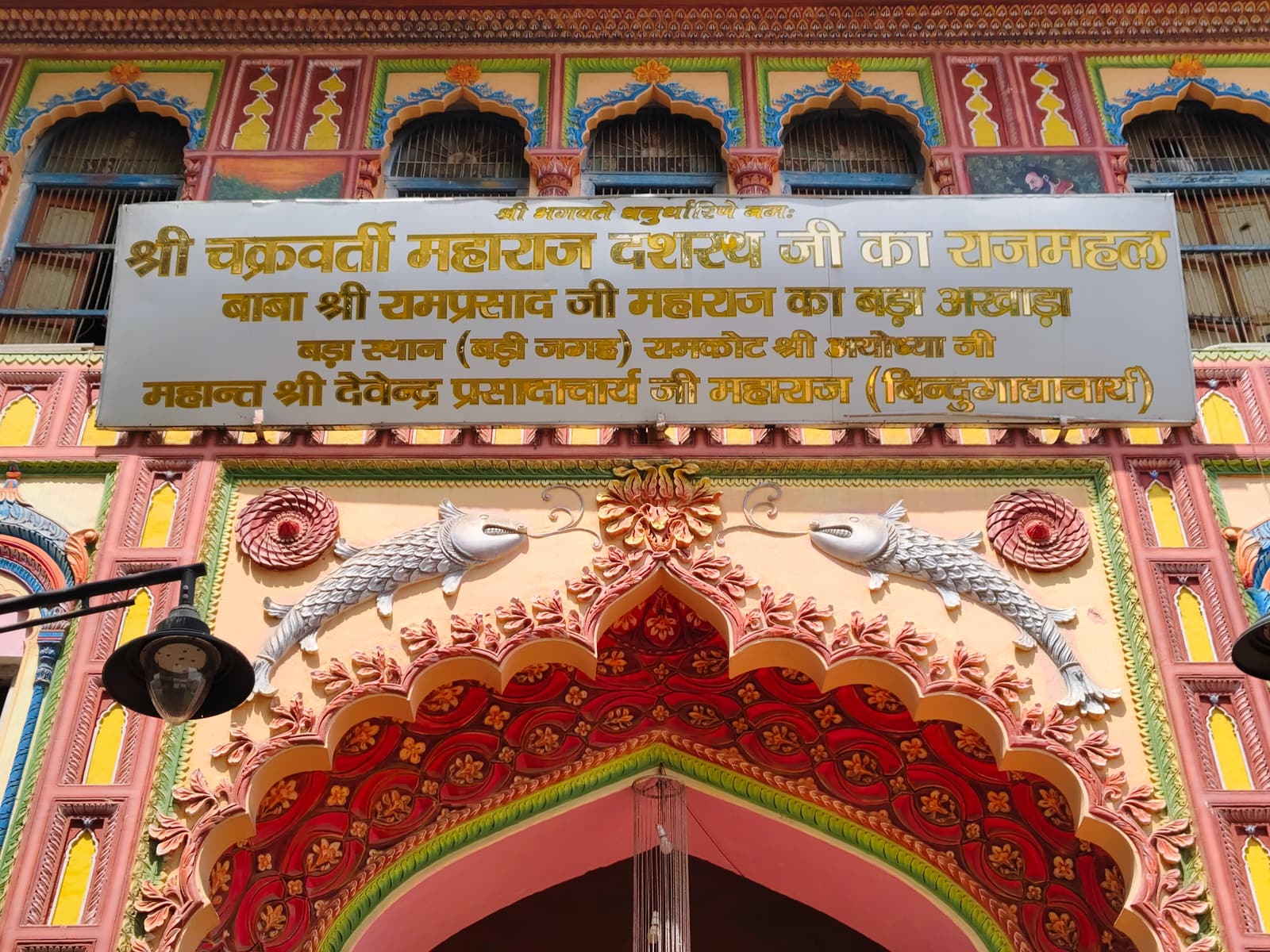 Ram Mandir & Ramkot
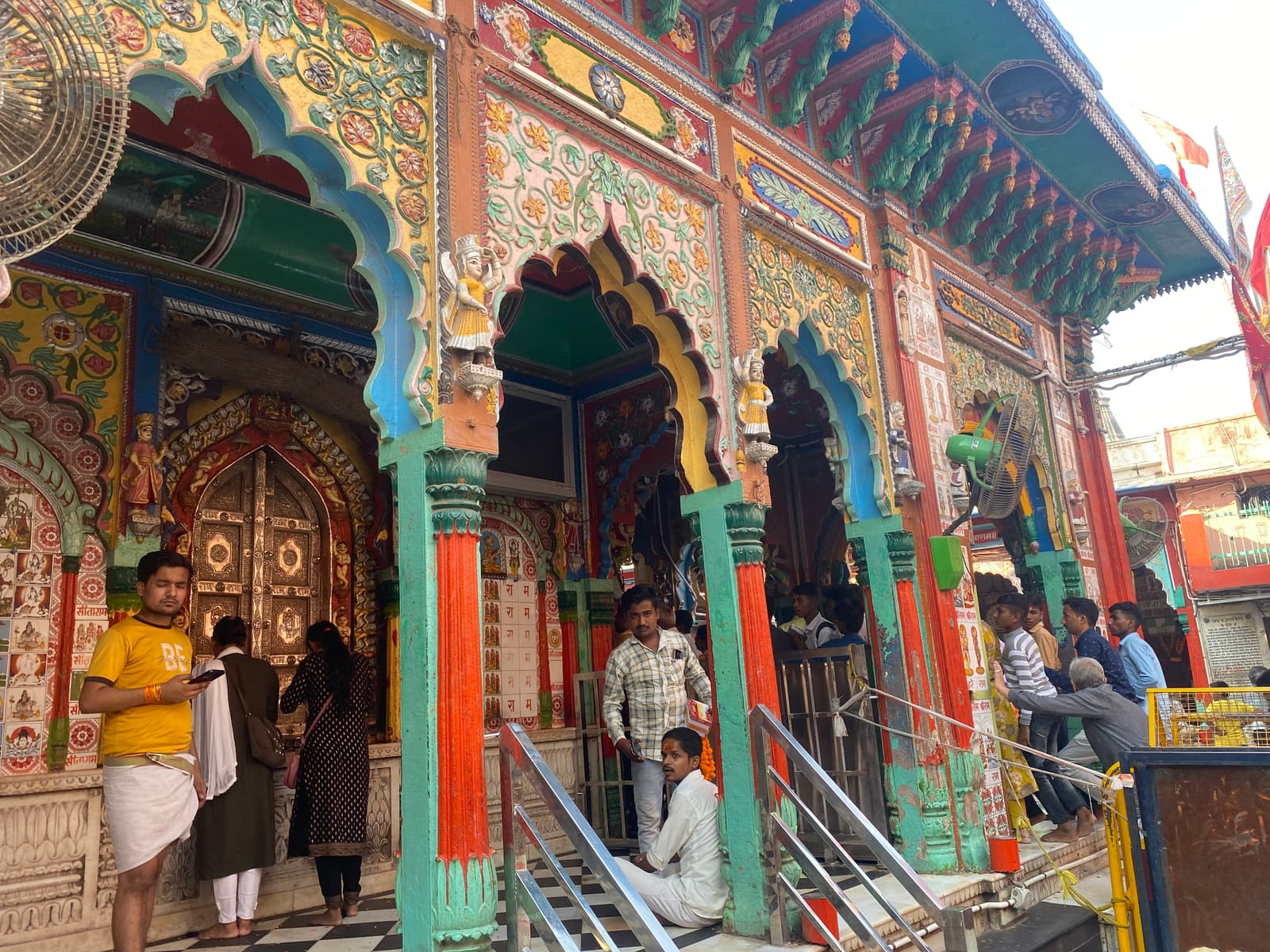
 Dashrath Mahal
The palace of King Dashrath
A colourful temple-palace in Ramkot on the site associated with the royal residence of Dashrath, father of Lord Ram. Its painted gateway opens onto a courtyard filled with the sound of bhajans.
See all ten places, with practical details for each, on the things to see page.
How many days?
- One day is enough for the Ram Mandir, Hanuman Garhi, Kanak Bhawan, Dashrath Mahal and the Saryu aarti.
- Two days lets you have darshan twice (morning and evening feel different), see Guptar Ghat and the riverside shrines, and rest at midday.
- Three to five days is the usual length for a circuit that adds Prayagraj and Varanasi, or Lucknow.
A one-day itinerary
- Early morning: Hanuman Garhi, then the Ram Mandir while the queue is short.
- Late morning: Kanak Bhawan and Dashrath Mahal, a few minutes’ walk away.
- Midday: lunch and rest — essential in the hot months.
- Late afternoon: e-rickshaw to Naya Ghat; visit Nageshwarnath Temple and walk Ram ki Paidi.
- Sunset: the Saryu aarti, then the illuminated ghats.
Festivals
- Ram Navami (March or April) marks the birth of Lord Ram and draws the largest crowds of the year.
- Deepotsav, on the eve of Diwali (October or November), lights the ghats with a vast number of earthen lamps.
- Kartik month brings the Panchkosi and Chaudah Kosi parikrama walks and bathing on Kartik Purnima.
- Sawan Jhula Mela (July or August) and Vivah Panchami (November or December) are important local festivals.
Dates follow the Hindu lunar calendar and move each year. See when to visit.
Food
Food around the temples is vegetarian, and alcohol is not sold in the temple town. Expect simple north Indian thalis, kachori and sabzi for breakfast, chaat, lassi and milk sweets such as peda. Many ashrams and charitable kitchens serve free or low-cost meals (bhandara). Drink bottled or filtered water.
Money and connectivity
ATMs are plentiful and UPI payments are accepted almost everywhere, though e-rickshaw drivers and small stalls prefer cash — carry small notes. Mobile coverage is good, but remember that your phone will be in a locker while you are inside the temple; agree a meeting point with your group beforehand.
Etiquette
- Dress modestly and remove footwear before entering any temple.
- Follow the queue and the instructions of volunteers and police; do not stop for long in front of the sanctum.
- Ask before photographing sadhus, priests or people bathing at the ghats.
- Keep the ghats clean — do not leave plastic or offerings wrapped in plastic in the river.
Safety and health
- Monkeys are everywhere around Hanuman Garhi and Ramkot. Do not carry food or prasad openly, and keep spectacles and small bags secure.
- Heat: from April to June, afternoons are dangerously hot. Go early, drink plenty and protect your head.
- Crowds: on festival days keep children close, carry written contact details for elders and fix a meeting point.
- Touts: ignore offers of paid darshan, “special” entry or unofficial donation collection.
- The river: the Saryu has strong currents, especially in the monsoon. Bathe only at the main ghats and stay within the barriers.
What to pack
- Government photo ID for every adult
- Slip-on footwear and a pair of socks
- A cap or scarf, sunscreen and a water bottle in summer; warm layers in December and January
- A small cloth bag for prasad, and some cash in small notes
- Any regular medicines — take what you need before joining the queue