Ayodhya has the climate of the north Indian plains: a short, cool and often foggy winter, a very hot dry summer, and a humid monsoon. The temple is open all year, so the question is really how much heat, rain or crowd you are willing to accept.
In short: for comfortable weather, come between October and March. For the smallest crowds, choose ordinary weekdays outside festival periods and school holidays.
The seasons at a glance
| Season | Months | Weather | Good to know |
|---|---|---|---|
| Autumn | October–November | Warm days, pleasant evenings | Deepotsav and Kartik festivals; book well ahead |
| Winter | December–February | Cool days, cold nights, frequent fog | Trains and flights often delayed; stone floors are cold |
| Spring | March | Warm and dry | Comfortable until the heat builds; Ram Navami may fall late in the month |
| Summer | April–June | Very hot, often above 40°C | Visit at dawn or after dusk; Ram Navami often falls in April |
| Monsoon | July–September | Hot, humid, heavy showers | Fewer visitors; the Saryu runs high |
October and November: the festive season
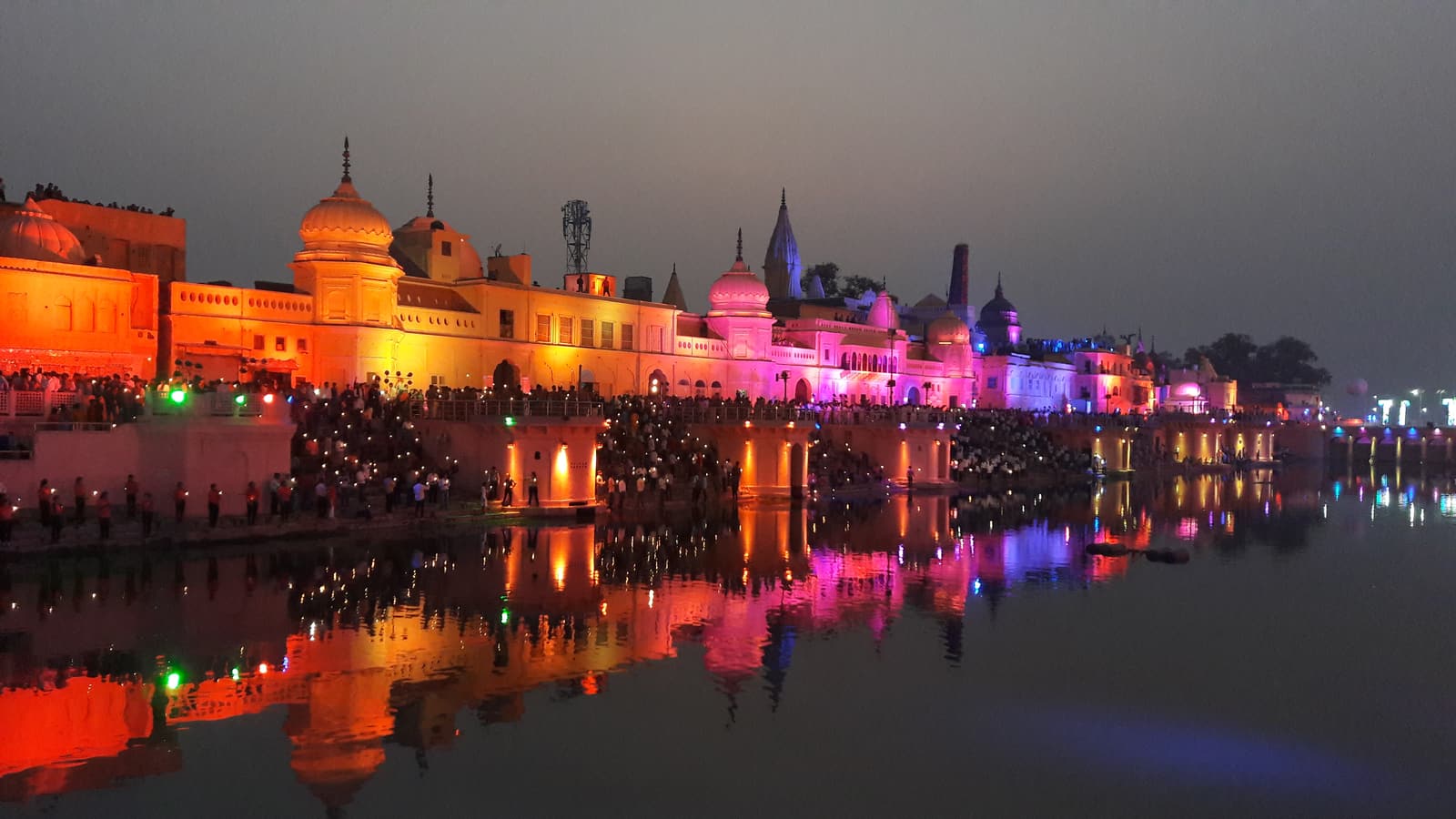
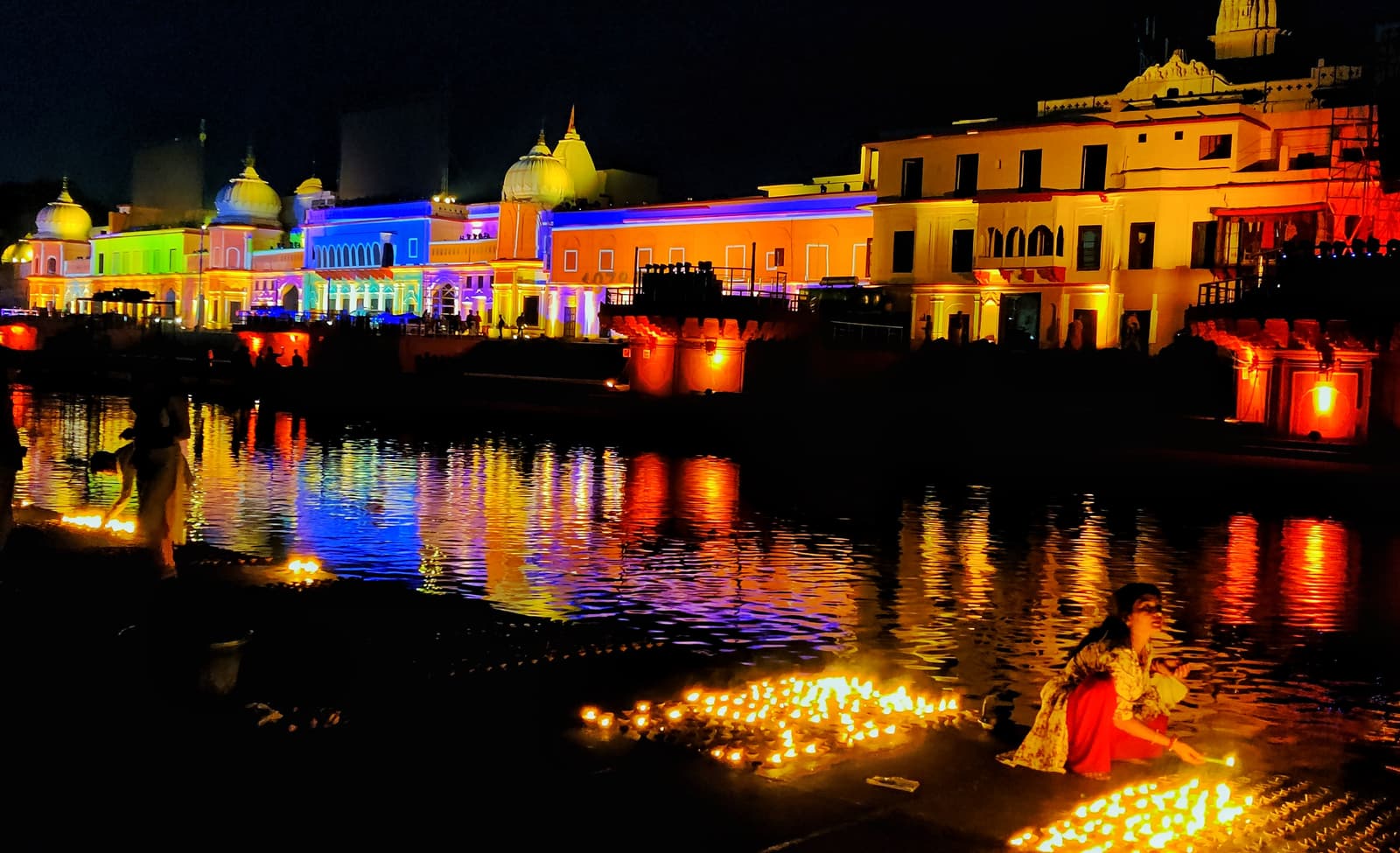
The rains end, the air clears and evenings by the Saryu are at their best. This is also when Ayodhya celebrates Deepotsav on the eve of Diwali: Ram ki Paidi and the surrounding ghats are lined with earthen lamps — more than two million in recent years, according to the organisers — with a laser show, processions and Ramlila performances. It is spectacular and extremely crowded. Hotels sell out and roads close, so book early or plan to come a few days before or after.
The month of Kartik that follows brings the Chaudah Kosi and Panchkosi parikrama — walking circuits of the sacred area — and the Kartik Purnima bathing day, each drawing very large numbers of pilgrims.
December to February: cool, with fog
Days are mild and good for walking, but nights and early mornings are cold, and standing barefoot on stone before sunrise is hard without socks. Dense fog is the main problem: from mid-December to late January it regularly delays trains and flights and slows the highways. The anniversary of the consecration on 22 January and Makar Sankranti bring extra crowds.
March to June: Ram Navami and the heat
March is pleasant. Ram Navami, the birthday of Lord Ram, falls in late March or April and is the biggest day in Ayodhya’s calendar: the temple extends its hours, hundreds of thousands of pilgrims arrive, and the town runs on special traffic and queue arrangements. Come for it if you want the devotion and energy; avoid it if you want a calm darshan.
From April the heat builds quickly, and in May and June temperatures often pass 40°C with hot winds. If you must come then, have darshan soon after the temple opens, rest indoors from late morning to late afternoon, and go to the ghats after sunset.
July to September: the monsoon
The rains bring relief from the heat but high humidity and sudden downpours. Crowds are lighter, hotel rates are lower and the town is green. The Saryu rises and can flood its lower ghats, so boat rides and riverside access may be restricted. The Sawan Jhula Mela, when deities are placed on decorated swings, falls in this season.
Best days of the week
Tuesday to Thursday mornings are usually the quietest at the Ram Mandir. Weekends, public holidays and full-moon days are busier. Hanuman Garhi is busiest on Tuesdays and Saturdays.